Isobel Greenhalgh
Lucina White
Lennon Alexis Romo
Juraj Copak
Eve Gittins
Emily Giulianotti
How often do we pay attention to the natural world in our cities? What ecosystems exist within human built environments? Cities are built for people but we are not the only things that live here. We think that encouraging peaceful co-habtiation with our non-human neighbours is important, so we’re creating a series of three multi-media interactive posters that tell the stories of pigeons, bees, and dandelions in the city. Using data from GMCA reports on the state of nature in Greater Manchester amongst others the below information hopefully sheds a light on the importance of nature remaining in our cities!
City pigeons as we know them today are actually called Rock Doves. As the name suggests, when wild these colourful birds make their home in the cliff rocks of coastal areas. Today synonymous with cities all over the world it’s become rare to see them in their natural habitat, instead finding simulation cliffs in the eaves and crags of city buildings. The pigeons we’re most used to seeing are the result of hundreds of years of domestication. No longer adapted to their original habitats, pigeons, once a beloved companion used to send messages or kept as pets, were largely abandoned after WWII. It’s often joked about how bad pigeons are at building nests and survival in general but they are still learning how to live without us.
Up against all odds, our own pigeons here in Manchester have been more recently under threat from contracters at Manchester Victoria train station. According to an investigation by The Mill, a third party company have been carrying out pigeon culls on behalf of northern rail, often leaving the birds alive and suffering for extended periods without a shred of empathy. Whether you like pigeons or not, they are living creatures as deserving of respect as any other and an important part of the ecosystem.
Pigeon droppings are rich in nutrients that feed plants due to their seed heavy diets, those plants are needed for oxygen and air purification. They don’t deserve to come to an untimely death trying to find a home when theirs has been eradicated.
(https://manchestermill.co.uk/inside-the-manchester-victoria-pigeon-massacre)
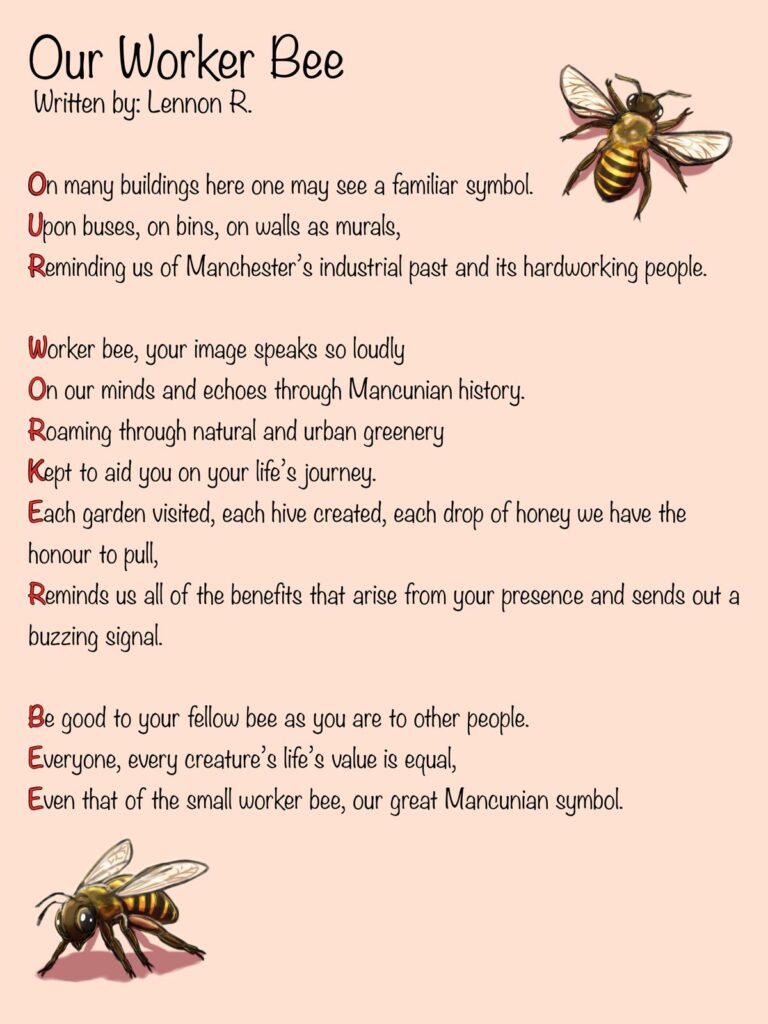
The bee began its journey in Manchester when the Independent Order of Oddfellows, a fraternal organisation set up to support working craftsmen in the city at a time when guilds and unions were failing, adopted the beehive as their emblem. It was used to represent working together for the common good. The Oddfellows are still going and supporting people from all backgrounds providing friendship and support to those without, aiming to foster more community spirit. It was around 3 decades later when the bee was adopted into the Manchester coat of arms inspired by their work. Today it represents the spirit of the worker in this highly industrial city whose working class populations over generations have contributed to the modern infrastructure that surrounds us today. (https://manchesterbe.es/index.php/the_manchester_bee_timeline/)
The nearest working beehive to the Bright Building can be found at the Manchester Museum, so the next time you see a bee on your way to work, this might be where it’s headed! (https://manchesterbe.es/index.php/map/)
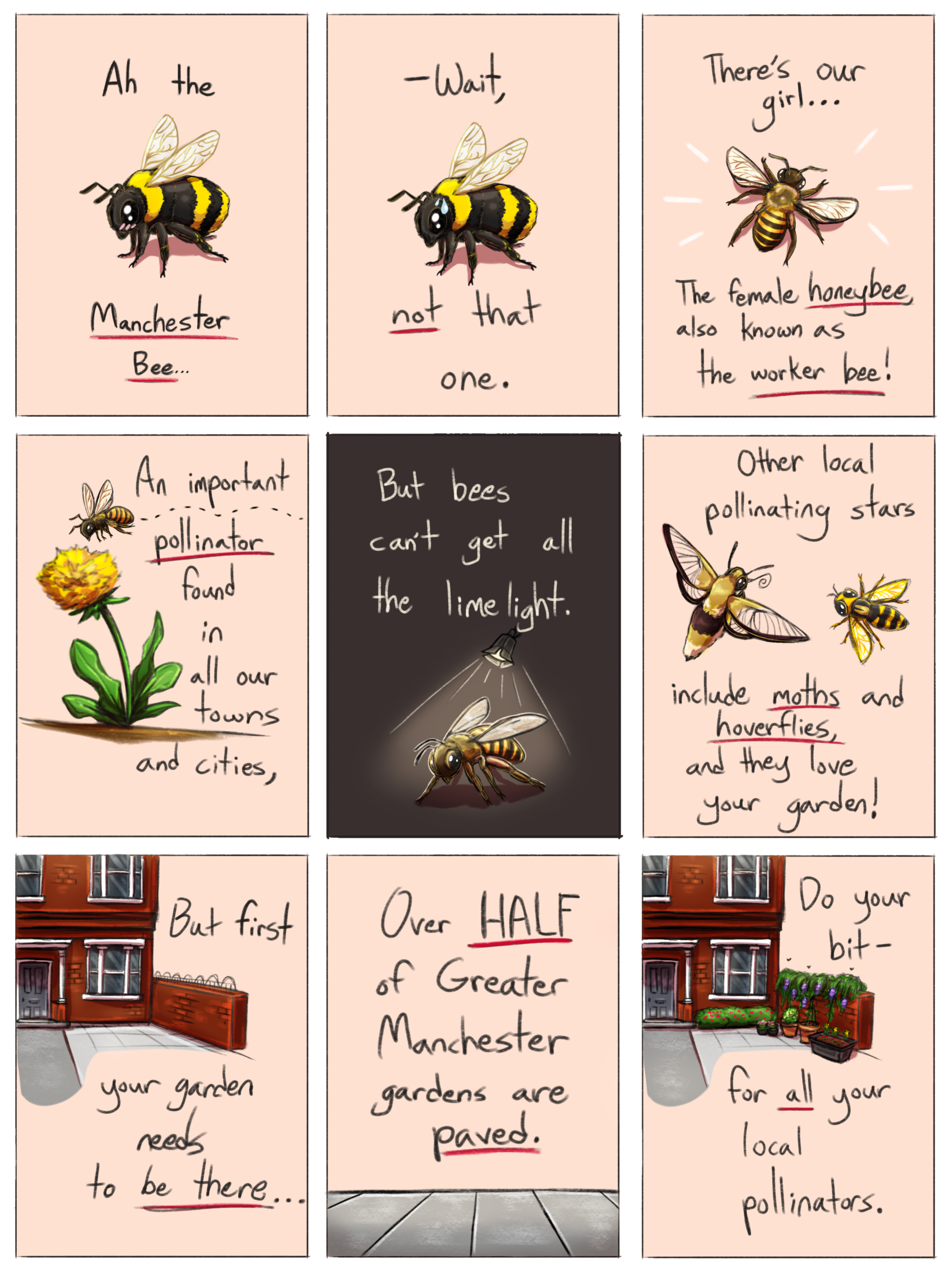
Bees are not the only important pollinator that is under threat in our cities, hoverflies and moths are just as important as our bees and are equally under threat due to habitat loss. Due to the large focus on bees, not enough studies have been done to determine the effects of the decline of these pollinators. We’ve made homes for bees to remain in our urban environments but moths require tree canopies to raise caterpillars and hoverflies rely on stagnant water to breed, both of which are scarce in cities.
(https://sheffield.ac.uk/news/urbanisation-linked-43-cent-drop-pollinating-insects)
Pollinators of all kinds flock to gardens, the last oasis in our vast metropolis. But in order for them to thrive in your garden, it needs to be there. Over half of Greater Manchester’s gardens are now paved and that number is growing steadily. Without plants, especially native varieties, our insects are dying out and the plants they rely on will soon follow. Whilst in this modern age it might not feel like it, but we are as much a part of the ecosystem as any other living thing. As much as it relies on us, we also rely on it to survive for our air, our food, and our medicine. You can do your bit by bringing the oasis back and planting a variety of native plants that will help your surround green spaces thrive.
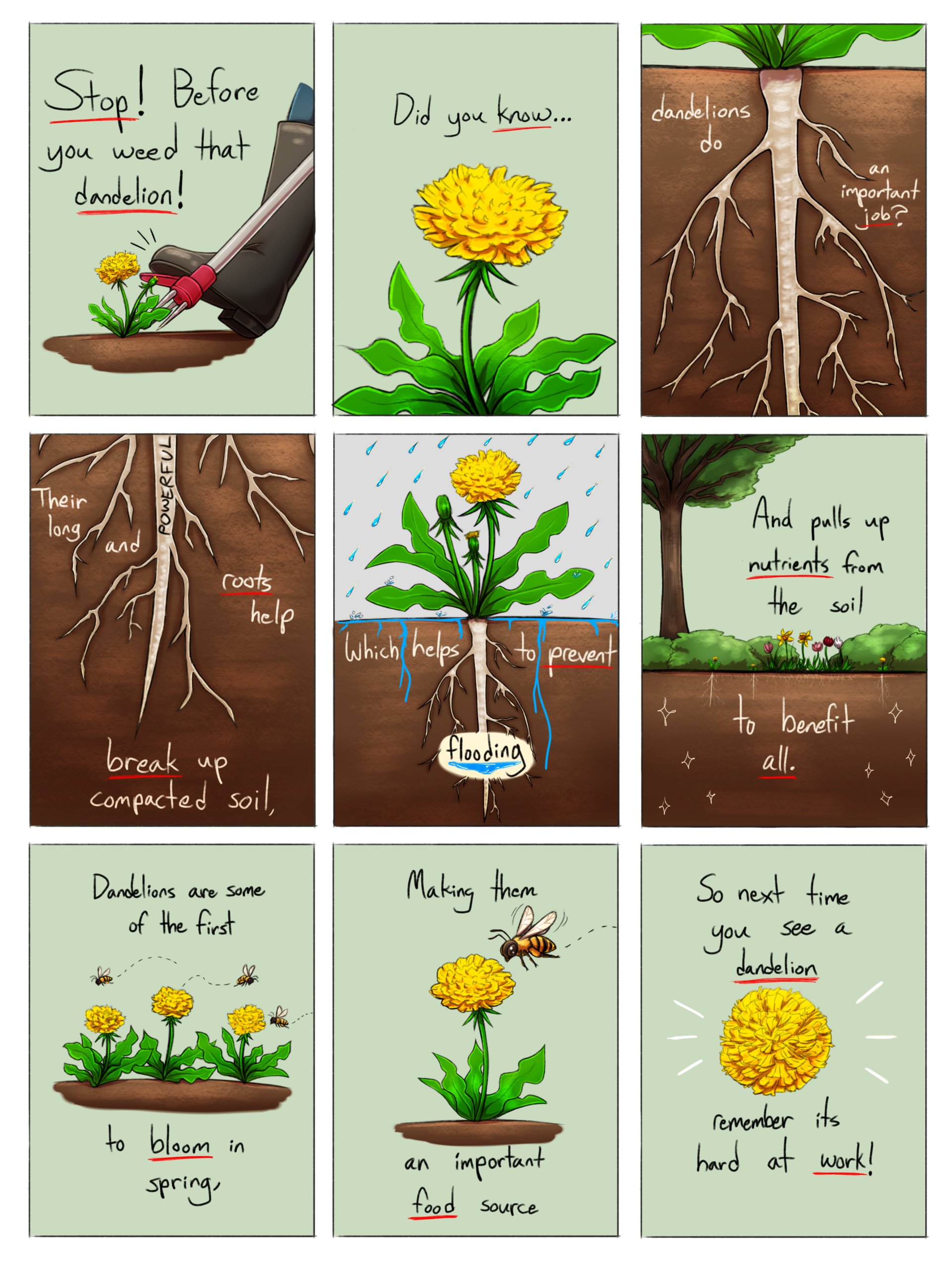
The humble dandelion has gone through somewhat of a fall from grace over time. Named for their apparent resemblance to a lion’s tooth, the french dente de lion eventually became our dandelion. Once known to be a useful diuretic in herbal medicine, a delicious addition to tea, and a nutritious snack. The widespread use of lawns changed people’s perception of the flower, its long, powerful roots making it difficult to keep out of otherwise pristine patches of grass. But far from a nuisance, its strong and deep roots are what enables its hidden superpower to break up compacted soil improving drainage and making way for earth dwelling bugs and worms that are essential to soil ecosystems.
Dandelions are some of the first food sources for not just pollinators, but also small mammals coming out of hibernation such as hedgehogs. Many critters love dandelion leaves as much as we used to. At the end of their lifecycle even the dandelion clocks have a role to play making comfy bedding for small birds and delight at blowing them and watching them disperse, proof of humans’ essential role in the circle of life.
Breaking up compacted soil is the real crowning achievement of the dandelion and why it should be welcomed once again in urban areas. Flooding is becoming an increasing problem across Manchester and one of the reasons is that the water has nowhere to go. When rain falls on soil that contains plants with deep, strong roots like the dandelion, the water flows into the soil, disperses into ground water, and is drunk up by the thirsty plants. Even better if this ground is rich with moss which thrives on this moisture. As rain levels continue to increase with climate change it’s becoming even more important to manage ground water in our cities, so why not give our bright yellow friend a chance?
(https://caledonianhorticulture.co.uk/dandelion-so-much-more-than-a-weed/)(https://wildwalks-southwest.co.uk/dandelions-10-qualities-of-this-wonder-weed/)
Think you’ve deciphered our poem through the eyes of a bee? Dropdown the menu below to read the full thing!